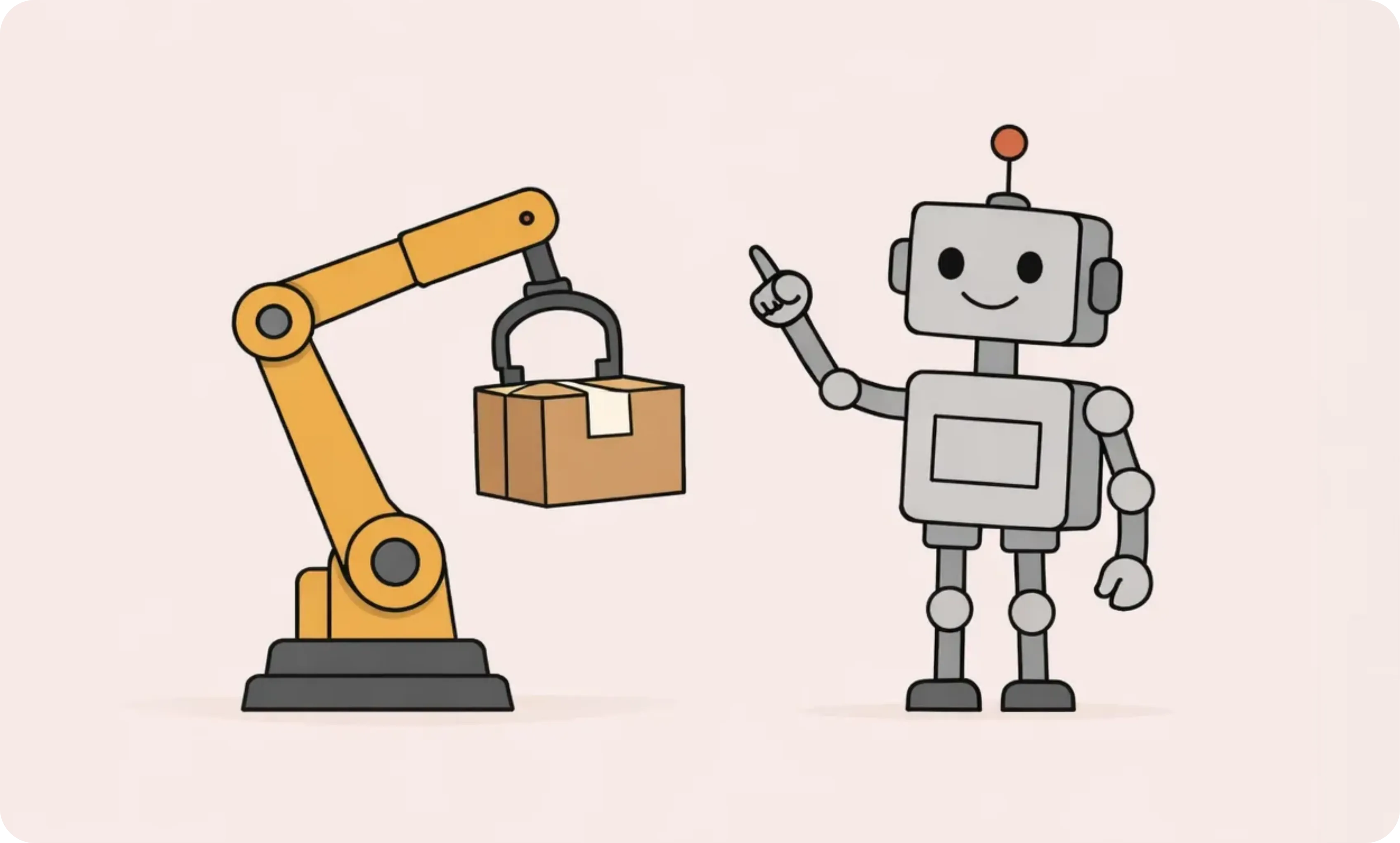
Artificial Intelligence in Manufacturing and Logistics: Frequently Asked Questions
Manufacturing and logistics are areas where artificial intelligence is already delivering tangible results today. From predictive maintenance to supply chain optimization—AI solutions help reduce downtime, conserve resources, and increase efficiency. In this article, we answer the most common questions about AI applications in these fields.
1. What is predictive maintenance and how does AI enable it?
Predictive maintenance is a strategy where equipment is repaired not according to a schedule, but when AI models detect an approaching failure probability. The system analyzes sensor data—vibration, temperature, pressure—and identifies anomalies that indicate an impending failure. This allows reducing unplanned downtime by up to 50% and extending equipment lifespan.
2. How does AI help optimize the supply chain?
AI algorithms analyze historical sales data, seasonality, market trends, and even weather forecasts to more accurately predict demand. Based on these forecasts, the system automatically adjusts order quantities, routes, and inventory levels. The result—lower warehousing costs, fewer stockouts, and faster customer delivery.
3. Can AI improve quality control in manufacturing?
Yes, computer vision allows automatic quality inspection of products on the production line. AI systems recognize defects that the human eye might miss—microcracks, color deviations, or dimensional non-conformities. Such systems operate faster than humans and ensure consistent quality 24/7.
4. How do IoT and AI work together in manufacturing?
IoT sensors collect data from equipment in real-time—temperature, vibration, energy consumption, production speed. AI models analyze this data, identify trends, and make decisions: adjust process parameters, signal anomalies, or optimize energy consumption. This combination enables a shift from reactive to proactive production management.
5. Can AI be integrated with existing ERP systems?
Yes, modern AI solutions are designed to integrate with popular ERP systems—SAP, Microsoft Dynamics, Odoo, and others. Integration occurs through API interfaces, and AI modules complement the existing system rather than replacing it. It's important to start with a clear business task—for example, demand forecasting or inventory optimization—and integrate gradually.
6. How does AI help automate warehouse operations?
AI optimizes warehouse layout by placing the most frequently picked items closer to the packing zone. Route optimization algorithms reduce the distance traveled by workers or robots. Additionally, AI predicts outgoing order flows and helps plan workforce needs by hour or day.
7. How accurately can AI forecast demand?
Depending on data quality and industry, AI demand forecasts are 20–50% more accurate than traditional statistical methods. Best results are achieved when models have at least 2–3 years of historical data and additional contextual variables—holidays, promotions, competitor actions. It's important to regularly retrain models as market conditions change.
8. What is a digital twin and how is it used in manufacturing?
A digital twin is a virtual model of a physical object or process that reflects its state in real-time. In manufacturing, digital twins allow simulating production line changes without physical experiments—testing new parameters, optimizing flows, or predicting failures. This is especially valuable in expensive and complex production environments where experimentation with real equipment is costly.
9. How long does it take to implement an AI solution in manufacturing?
The first pilot project typically takes 2–4 months—from data collection to a working prototype. Full implementation, including integration with existing systems and employee training, can take 6–12 months. We recommend starting with one clear task and, after achieving results, expanding application to other areas.
10. What investment is required for AI implementation in a manufacturing company?
A pilot project for a medium-sized manufacturing company can cost between 15,000 and 50,000 euros, depending on task complexity and data readiness. It's important to evaluate not only implementation cost but also return on investment—often predictive maintenance pays for itself within 6–12 months due to reduced downtime and repair costs. Start with a business case analysis that will help identify areas with the greatest potential.
Want to learn more?
Contact us to discuss how artificial intelligence can help your business. Get in touch — the first consultation is free.